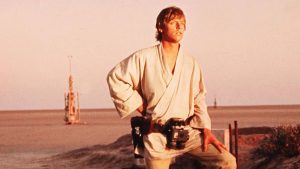
The summer of 2026 has turned into one of the roughest stretches the box office has endured in years, as multiple blockbusters became flops. Supergirl opened to just $37.1 million domestically before dropping another 74% in its second weekend, a collapse that has Warner Bros. bracing for a loss north of $100 million. Masters of the Universe fared even worse, managing only $29.43 million domestically on a movie that cost more than $170 million to produce. Meanwhile, The Mandalorian and Grogu, meant to relaunch Star Wars on the big screen after a seven-year absence, became the lowest-grossing live-action film in the franchise’s history, falling short of even Solo. Mortal Kombat II rounds out the carnage, earning strong reviews but stalling around $125 million worldwide against an $80 million budget that needed at least $150 million just to break even.
None of those four outcomes counts as a total shock. Supergirl carried a character with no history of driving ticket sales on her own, while Masters of the Universe leaned on a toy line with a small built-in audience. In its turn, The Mandalorian and Grogu was, structurally, a fourth season of a television show stretched onto multiplex screens years after the show’s momentum had cooled. Finally, Mortal Kombat II walked into a crowded calendar after a seven-month release delay drained its momentum. As a result, skeptics and box office analytics pointed out the risk of these projects before they hit the screen. Sometimes, though, a blockbuster walks into theaters with every advantage stacked in its favor, only to collapse anyway and leave everyone wondering how that could happen.
By the late 2010s, Tom Cruise had spent two decades as a box office guarantee, and Universal built its entire Dark Universe plan around that reputation. The studio spent roughly $195 million on production of The Mummy and pushed total spending past $345 million once marketing was factored in, betting that Cruise’s Nick Morton could do for classic monster movies what Robert Downey Jr. had done for Marvel. Furthermore, Ahmanet (Sofia Boutella), the resurrected Egyptian princess at the center of the story, was positioned as the first of a rotating cast of monsters that would eventually include Javier Bardem’s Frankenstein’s monster and Johnny Depp’s Invisible Man.
The amount of talent involved meant everyone expected The Mummy to at least turn a modest profit for Universal. However, once reviews were released, the movie was dragged through the mud, with critics tearing the movie apart, from the script to the acting. The movie holds a 15% score on Rotten Tomatoes, with audience approval barely better at 35%. Cruise’s star power still helped the movie to climb to $410 million worldwide, which still fell short of the roughly $450 million Universal needed to call the investment a win. As a result, every subsequent Dark Universe project, including a planned Bride of Frankenstein starring Angelina Jolie, was scrapped within two years.
Following the success of the Marvel Cinematic Universe, Warner Bros. wanted its own answer to Iron Man, and Green Lantern was built to be it. First, the studio handed the movie a $200 million budget, betting that Hal Jordan could carry a new DC franchise the same way Tony Stark had carried the MCU. Then, Warner Bros. brought a heavy hitter in front of and behind the cameras, with Ryan Reynolds tasked with using his proven charisma for the sake of DC, while Martin Campbell, fresh off reinventing James Bond with Casino Royale, gave the origin story the same credibility. That pedigree is what convinced Warner Bros. to pour another $100 million into marketing, plastering Hal Jordan across toy aisles, soda cans, and even a Six Flags roller coaster.
None of it worked. Green Lantern opened to just $52.6 million domestically and received awful reviews that now amount to a 25% Rotten Tomatoes approval rating. That poor reception left the $237 million worldwide total well short of covering the combined production and marketing spend. As a result, sequel plans, along with connected Superman and Flash scripts already in development at the time, were shelved within weeks. Warner Bros. would not attempt another shared DC universe until Man of Steel arrived two years later, effectively resetting the studio’s plans.
Following a series of badly received sequels, James Cameron returned to the Terminator franchise for the first time since 1991’s Terminator 2, and that alone was enough to make Terminator: Dark Fate feel like a guaranteed course correction. While only a producer, Cameron brought Sarah Connor (Linda Hamilton) back and paired her with the T-800 (Arnold Schwarzenegger) for a story explicitly designed to erase two previous sequels fans had already rejected. Paramount and its partners spent $185 million on the production, banking on that reunion to reverse a decade of diminishing returns, and early tracking pointed to a domestic opening near $40 million. The film also earned the best audience reaction the series had gotten in over a decade, landing a B+ CinemaScore, a grade most sequels never came close to.
Even with all of that in its favor, none of it translated into ticket sales. Terminator: Dark Fate opened to just $29 million domestically and topped out at $261 million worldwide, nowhere near the reported break-even point of $450 million. That gap proved too large to close, and sources close to the production confirmed there were no plans for a follow-up almost as soon as the final numbers came in. In the end, a warm reception from the people who actually bought tickets couldn’t undo years of accumulated audience fatigue with the franchise.
The Lone Ranger felt like a can’t-miss investment after Disney reassembled the exact team behind the Pirates of the Caribbean franchise, including producer Jerry Bruckheimer, director Gore Verbinski, and Johnny Depp, this time playing Tonto. Betting that the combination responsible for billions in worldwide grosses could work the same magic on a different property, the studio spent between $215 million and $250 million on production and another $150 million on marketing. That kind of spending treated the film as a tentpole capable of launching its own franchise around Depp and the title character (Armie Hammer).
Reviews for The Lone Ranger turned hostile well before release, and the film opened to just $29.3 million domestically over its Fourth of July weekend, a number Disney’s own executives had projected closer to $60 million. The final worldwide tally landed at $260.5 million, and that shortfall prompted Disney’s chief financial officer to confirm a write-down between $160 million and $190 million, one of the largest single-film losses any studio had ever disclosed publicly. Bruckheimer’s decades-long partnership with Disney ended within months of the movie’s release, and any hope of a Lone Ranger franchise vanished just as fast.
By the time Solo: A Star Wars Story reached theaters, Lucasfilm had released three consecutive Star Wars films that each topped $1 billion worldwide, a streak that made the brand feel immune to box office risk. Disney spent an eventual $275 million on production of the spinoff after firing original directors Phil Lord and Christopher Miller mid-shoot and replacing them with Ron Howard, a costly disruption that still didn’t shake industry confidence given Star Wars‘ unbroken track record. Tracking heading into the Memorial Day weekend projected a domestic opening capable of setting a holiday record, and everyone bet that the movie was a sure hit.
Instead, Solo: A Star Wars Story debuted to just $103 million domestically, a number that would have been a triumph for almost any other release but represented a genuine crisis for Star Wars. Even worse, bad word-of-mouth led to drastic drops in revenue in the following weeks, with the movie limping to a final worldwide total of $393 million. That gross made Solo the first Star Wars film in history to lose money theatrically, an outcome nobody inside or outside Lucasfilm could have anticipated. The failure led Disney to shelve standalone films built around Boba Fett and Obi-Wan Kenobi almost immediately and completely change the franchise’s strategy.
Which blockbuster flop caught you the most off guard? Leave a comment below and join the conversation now in the ComicBook Forum!