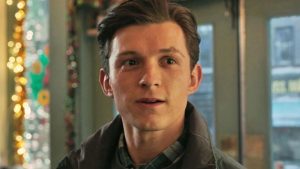
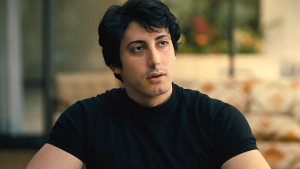
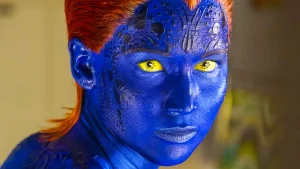
Marvel Studios announced at D23 in August that Maya Boyd will play Ororo Munroe, better known as Storm, in the X-Men film arriving May 5, 2028. Boyd is twenty-three, comes from Broadway rather than film, and this will be her first movie. It will also be the first time Storm has appeared in the Marvel Cinematic Universe in any form, which is a slightly absurd sentence to type about one of the most recognizable superheroes on the planet. Every other major X-Man has been circling the MCU in rumor and cameo for years. Storm has been sitting outside it entirely. So the casting itself is welcome. But the thing I keep thinking about is not the actress or the film. It is the door Marvel did not walk through, because for about a decade the obvious way to get Storm into this universe ran through Wakanda, and I am relieved that is not what happened.
The version of this that almost happened is easy to describe, because Marvel had been pointing at it for a decade. Storm and T’Challa were married in the comics in 2006, and from the moment Wakanda became one of the most valuable properties in the studio’s catalog, the simplest route to putting Storm on screen was as the queen of a kingdom audiences already loved. That route is closed now for reasons that have nothing to do with anybody’s preference, and its closure is the best thing that could have happened to the character. Storm has one of the deepest solo histories in Marvel Comics. She has led the X-Men, ruled without a husband, held her own title, and beaten characters far above her weight class. Arriving in a film where she is a member of the team rather than somebody’s wife gives her a foundation that the other path would have quietly taken away before she ever stood on it.
The D23 announcement put Boyd alongside Sadie Sink as Jean Grey, Kit Connor as Cyclops, Christopher Abbott as Charles Xavier, Samara Weaving as Emma Frost and Adam Driver as Nathaniel Milbury, under director Jake Schreier. That is a mutant ensemble, and Storm enters it as a mutant among mutants. It sounds obvious. It is not, because there was an entirely plausible version of the last ten years in which Storm turned up in a Black Panther film first, as a Wakandan ally or a queen or a woman T’Challa had once known in his youth. Nothing was ever announced along those lines, and I want to be clear that I am not claiming Marvel planned it. But the pull was real, fans asked for it loudly and often, and at least one actor who has played Storm has publicly lobbied for that romance to reach the screen. Marvel had a version available where the most famous Black woman in superhero comics was introduced through the most famous Black man in superhero movies. It did not take it.
It is worth getting the history right, because the version everyone repeats is wrong. Storm and T’Challa were not invented as a couple in the 2000s. Chris Claremont and John Byrne put them together in 1980, in a story that showed the two of them as teenagers crossing Africa, fighting a mercenary together and being obviously taken with each other. That is a quarter century before the marriage. What happened in the 2000s was that Reginald Hudlin picked the thread up and married them, in an arc running across five issues of Black Panther that culminated in a wedding in September 2006. The reaction was genuinely split rather than uniformly hostile. Marvel’s editor-in-chief at the time described it as drawing both cheers and boos. The more interesting objection came from Claremont himself, who did not like the marriage, which is a notable thing for the man who built the modern version of the character to say about where she ended up.
Here is my actual objection, and I want to separate it cleanly from the idea that the relationship was a bad idea, because I do not think it was. The problem is what the wedding storyline did to Storm’s position in her own scenes. She spends that arc reacting to a proposal rather than making decisions, and Charles Xavier explicitly frames the marriage as the most important thing she will ever do because it makes her a living symbol of human and mutant relations. That is a strange thing to tell a woman who has led an X-Men team. Her story becomes structurally about somebody else’s kingdom. The marriage did not last, collapsing across Avengers vs. X-Men in 2012 when T’Challa declared it annulled, and the two have not been a couple in main continuity since. But the shape of that arc is the risk, and it is the risk that would have followed her onto the screen if she had arrived in a film with somebody else’s name on the poster.
I should say that not everyone here agrees with me. On September 7, fellow ComicBook writer Shawn Lealos made the case that Marvel should build toward this romance on screen, and that Storm needs a larger role in Black Panther 3 than in the X-Men film. It is a real argument and there is a version of it I find persuasive, because the Wakanda connection is genuinely one of the richest things in her publishing history. But there is a complication that I think settles it. Chadwick Boseman died in 2020, Marvel has not recast T’Challa, and Black Panther 3 arrives December 15, 2028 with David Jonsson playing Toussaint, T’Challa’s son. The romance as written across forty-six years of comics is not available to the MCU. Whatever Storm and Wakanda become on screen, it will have to be something new, and she is better served entering that conversation as an established figure than as its starting point.
This is the part that convinces me, and it is a straight comparison. In comics, Storm has spent the last two decades climbing. She has led the X-Men, led the first all-female X-Men team, run a school, sat on Krakoa’s governing council, ruled Wakanda and then served as regent of Arakko. She joined the Avengers in 2024 under the billing Earth’s Mightiest Mutant, and she is headlining an ongoing solo series that launched in February. On screen, across four films with Halle Berry and two with Alexandra Shipp spanning twenty-six years, she has been one of the characters the Fox films consistently underpowered, and Shipp said as much herself when asked about the MCU, noting that Storm barely has anything to say as it is. The gap between the comics Storm and the movie Storm is enormous, and it has been for a long time. Putting her in an X-Men ensemble with a director building a team from scratch is the first real chance the films have had to close it.
I am not going to pretend a casting announcement guarantees anything, and nobody has said how large this part is. But for twenty-six years the screen version of this character has been somebody’s weather support. Starting her in the X-Men rather than in someone else’s kingdom is the first decision in a while that suggests Marvel knows what it has.