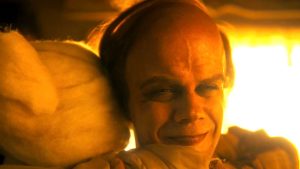
McDonald’s probably wasn’t expecting Batman to cause a parenting crisis. The restaurant had a pretty simple plan. Put some Batman toys in Happy Meals and let millions of kids drag their parents through the drive-thru. What’s not to love? There was just one problem. Tim Burton had made a Batman movie that featured a grotesque villain with black goo dripping from his mouth and a Catwoman who wasn’t exactly selling the virtues of a healthy childhood. Parents weren’t amused. Neither was the fast-food giant.
Batman Returns arrived in 1992 and quickly became an awkward problem for the people selling it. Warner Bros. wanted another enormous Batman hit. McDonald’s wanted to sell toys to children. Burton wanted to make the strange and twisted movie he’d imagined. Those plans didn’t exactly get along. The resulting backlash became one of the most bizarre controversies in superhero movie history. It also helped convince Warner Bros. that Burton wasn’t the right person to take Batman into another adventure.
Remember when getting a Batman toy with your Happy Meal was practically the best thing that could happen to a kid? Warner Bros. and McDonald’s certainly understood the appeal. The two companies teamed up to promote Batman Returns with a major marketing campaign. McDonald’s restaurants joined in with Batman-themed packaging and promotional merchandise. It seemed like an easy win. The first Batman had become a massive hit in 1989. Why wouldn’t families want more of the Caped Crusader?
Unfortunately, Burton had very different ideas about what a Batman sequel should look like. His version of Gotham was a grimy Christmas nightmare. Danny DeVito’s Penguin crawled around with a disgusting black substance leaking from his mouth. Michelle Pfeiffer’s Catwoman carried a whip and wore a stitched-together leather costume. People got burned, attacked, and thrown around with remarkable enthusiasm. This wasn’t exactly the stuff of a cheerful family outing.
Parents noticed the difference. Complaints started arriving from families who felt the marketing had promised something much more suitable for children. Some even questioned why McDonald’s would promote a movie with such disturbing imagery through Happy Meals. The Washington Post and Los Angeles Times covered the growing backlash in June 1992. One parent complained that the film featured violence and sexual innuendo despite the child-friendly advertising campaign. McDonald’s suddenly found itself defending a promotion that looked rather questionable next to the actual movie. Burton later recalled the restaurant’s reaction to the Penguin’s black mouth goo. “What’s that black stuff coming out of the Penguin’s mouth?” was apparently the sort of question nobody wanted to answer during a Happy Meal marketing meeting. Burton’s recollection was even more blunt: “We can’t sell Happy Meals with that!” Fair enough. It’s difficult to imagine Ronald McDonald getting excited about that particular character design.
The funny thing is that Burton didn’t think he had made a particularly outrageous Batman sequel. In a 2014 interview with Yahoo Movies, he remembered the reaction as strangely divided. Some people thought Batman Returns was lighter than the first movie. Others thought it was considerably darker. Burton believed Warner Bros. had started looking at Batman differently. The word “franchise” had become increasingly important. Suddenly, the studio had to think about toys, fast food promotions, and whether children would want to watch the next installment. Burton wasn’t particularly interested in making those decisions for them. He wanted to make his movie. The McDonald’s controversy became a rather memorable example of what happened when those two ambitions collided.
Warner Bros. eventually moved in another direction. Burton stayed involved as a producer on the next film, but Joel Schumacher took over as director. Michael Keaton also walked away from the role. The resulting Batman Forever arrived in 1995 with a much brighter look and a considerably more playful attitude. Val Kilmer took over as Batman, while Jim Carrey and Tommy Lee Jones brought plenty of colorful chaos to Gotham. The movie even became another major commercial success. Warner Bros. had found the broader audience it wanted. Burton’s strange little corner of Gotham was finished, though. It’s tempting to blame the entire breakup on a disgruntled fast-food chain. The reality involved studio expectations and the growing commercial demands of a superhero franchise. Still, there’s something wonderfully ridiculous about the idea that a movie director’s relationship with Batman helped unravel because McDonald’s couldn’t figure out what to do with the Penguin’s mouth. That’s one Happy Meal nobody saw coming.