His name is Bond. James Bond. He’s a fictional British secret service agent, originally from Ian Fleming’s 1950s novels and short story collections, but he made the big screen in the ‘60s. Since his initial portrayal by Sean Connery, Bond, or as he’s better known, 007, has been a household name. Even if people haven’t seen all his movies, they know who he is. They know his basic premise, and they are fully aware of the Bond Girl phenomenon. They know he’s cool — James Bond has access to a plethora of cars, guns, and Q Branch-supplied gadgets — and suave, regardless of who, of the now seven actors, is playing him.
With Amazon taking over the franchise with Robert Pattinson in the lead role, there have been reports of a new origin for the character. Given the choice to go with a more youthful actor, a change from the last Bond, James Bond 26 is likely to go into the character’s backstory and show us a James Bond new to the service, instead of one who has been 007 for a while. Steven Knight has boasted of being given more leeway with the character, but it feels unlikely that he’ll be that different when he makes his way to our screens. Still, that may just be what makes the character work and keeps an audience for a franchise that, more than ever, is at risk of becoming irrelevant.
The cultural impact of James Bond cannot be overstated. A mere four years after Dr. No’s release in 1962, there were 22 secret agent films released, many trying to tap into the Bond franchise’s success and pop culture dominance. The protagonists were either Bond lookalikes or intentionally anti-Bonds of a harsher background than a reserve Navy member. “Bond. James Bond” is often referred to as the most loved and well-known one-liner in film, especially for British cinema-goers, and the film franchise is, decades-wise, the longest-running film series.
With many of the films as straight adaptations of the Ian Fleming novels, the immersion crafted by Fleming seems vital to the franchise. Fleming described his intention for his first Bond novel as wanting to “write the spy story to end all spy stories”, and based James Bond on people he had met during his time in WWII. With an intentionally plain-sounding name, James Bond was meant to be “a neutral figure —an anonymous, blunt instrument wielded by a government department.”
James Bond as a franchise wasn’t afraid to lean into the spirit of the times — see the 1979 film Moonraker, which ultimately took James Bond to space and embraced more sci-fi elements — but inevitably returns to its basics. 2006’s Casino Royale was a soft reboot of the franchise, not in line with the loose continuity of the previous films, and stripped away the gadgets that had distracted from the character. Critics and fans alike rejoiced to see Bond return to his roots.
With the confirmed reports of Robert Pattinson’s casting — after weeks of speculation among the Bond hopefuls — the Daniel Craig era has officially come to an end. From 2006 to 2021, Craig played Bond in five films amid a shifting cultural landscape. Other notable British franchises, such as Doctor Who and Sherlock Holmes, experimented with changing the quote-unquote look of their main character. To considerable backlash, Doctor Who cast Jodie Whittaker as the 13th Doctor, with her playing the main role from 2018 to 2021, and years later cast Ncuti Gatwa as the 15th. A CBS loose adaptation of Sherlock Holmes cast Lucy Liu as a female Watson in Elementary, which ran from 2012 to 2019, and Japan’s Miss Sherlock cast both Holmes and Watson as women, becoming the first show to cast a woman as Sherlock Holmes.
Around this time, the idea of a different 007 gained popularity — Daniel Craig frequently fielded questions from the press regarding whether he would be on board with a female James Bond. Craig was against the idea, but mainly out of his exhaustion with the character of 007, not an aversion to seeing women and actors of color as Bond-adjacent spies. Notably, Craig fired back: “Why should a woman play James Bond when there should be a part just as good as James Bond, but for a woman?”
Previous franchise producer Barbara Broccoli asserted that race is not an essential tenant of James Bond’s character, “but he is male.” During press for No Time to Die, both Barbara Broccoli and Phoebe Waller-Bridge admitted the original Bond’s attitude towards women needed to change with the times, but that the character himself is still relevant.
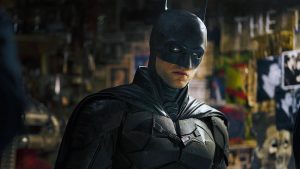
Robert Pattinson is arguably one of the most popular actors working in Hollywood today. In 2026 alone, he starred in The Drama and Primetime with notable feature roles in The Odyssey and Dune: Part Three. Although delayed, audiences are excited for his return as Bruce Wayne / Batman in The Batman Pt. II, and pretty much any residual criticism of him that’s lasted from his Twilight teen heartthrob days is gone.
Bringing a skilled actor like Pattinson to James Bond not only gives the franchise a fresher face, but also electrifying charisma. Given his numerous acting credits, Pattinson may not need James Bond, but James Bond could very well need him. James Bond is beloved, but Pattinson and a fresh script have the potential to make it a must-watch for the power of the writing and performances, and not for nostalgia. Although looking not much different than how Bond has looked in the past — aside from Robert Pattinson being a brunette — there are quite a few ways for Pattinson to bring fresh life to the character. He could follow in Craig’s footsteps with a cerebrally intense portrayal, or perhaps brush off the comedic chops and lean into the character’s history.
What direction do you want from James Bond? Was Pattinson the right choice? Let us know in the comments!